Description
Burgh Walls Camp (historically spelled Burwalls, Bower Walls, or Bowre Walls) was an important Iron Age hill fort that stood on the Somerset edge of the Avon Gorge, right at the top of Rownham Hill nearly 3,000 years ago.
Directions To Next TrekTik
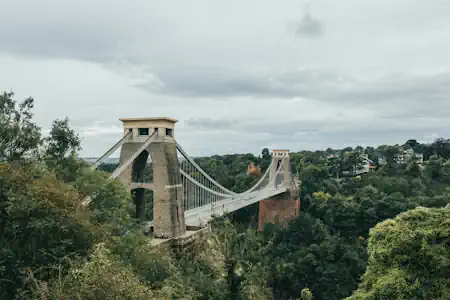
From here turn right onto Burwalls Road. Follow the road to the end where it joins Bridge Road. Turn right and head towards the bridge. The museum in on the other side of the road.
Fun Facts
One of Three – Burgh Walls Camp was part of a triple-fortress system guarding this narrow, tidal stretch of the River Avon. The trio consisted of: [1, 2]
1 – Burgh Walls Camp: On the southern flank of Nightingale Valley.
2 – Stokeleigh Camp: (Sill intact in Leigh Woods) on the northern flank of Nightingale Valley.
3 – Clifton Camp: Directly across the gorge where the Clifton Observatory stands today. [1, 2, 3, 4]
Big! – Burgh Walls fort covered 7 acres (4 football pitches) and used the cliff, banks and ditches for protection
1868 – When the Suspension Bridge was completed in 1868, the Victorians destroyed the fort to build houses
Burgh Walls House – (next to the Suspension Bridge) was built in 1872 right onto of the central enclosure of the old hill fort for the newspaper editor Joseph Leech.
Student Halls – Burgh Walls House was once a university halls of residence.